Category: Articles

  • Reivers Cycle Route

    The 172 mile Reivers Cycle Route (National Route 10) is a ‘coast to coast’ route between Tynemouth in Northumberland and Whitehaven on the Cumbrian West Coast via Kielder Forest and Carlisle.
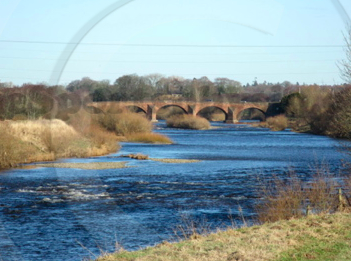
    River Esk at Longtown
    The River Esk at Longtown saw much Reiver activity

    The challenging Reivers Route has now been adopted as part of the National Cycle Network and mainly follows quiet country roads and traffic free cycle paths, weaving in and out over the Scottish / English border.

    This Cycle Route is named after the Border Reiver families such as the Armstrongs, Elliots and Grahams who’s raids and escapades made this area notorious.

    Travel through some breathtaking countryside in the footsteps or hoofprints of people like Kinmont Willie,  for whom raiding, murder and robbery were an everyday way of life in these tough and troubled lands.

    Remains of many of fortified Pele towers, the stronghold homes of the Reiver families in the 15th and 16th centuries can be seen along the route.

    The Reivers Cycle Route also makes an alternative return route for the Sea to Sea cycle route (C2C).

    The Sport and Performing Arts Injury Clinic situated just off the A69 in Warwick Bridge makes a handy stop off point to sort those aching muscles and strains.  There is also plenty of free parking for cycles and support vehicles.

    Further Information

    More Information of the Reivers Cycle Route can be found on the Cycle Guides website

    The Reiver Trail – About the Border Reivers
  • Hadrians’ Wall Cycle Route

    Hadrian’s Wall is probably the most visited Roman feature in the north of England and the Hadrian’s Cycleway follows this world heritage site for a distance of 174 miles.

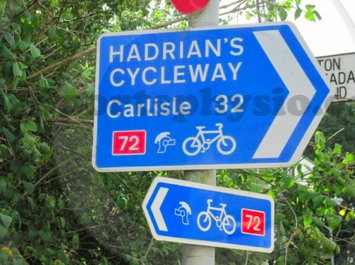
    Hadrian's Cycleway SignpostTaking you through the dramatic border lands, views along the length of the wall are simply breathtaking.

    There are a number of English Heritage Roman forts and museums along the way, with great places to stay and eat in some of our lovely northern villages and of course the historic City of Carlisle (known as Luguvalium in Roman times).

    Hadrian’s Cycleway is signposted as National Cycle Route 72 From Ravenglass on the West Coast to South Shields in Northumberland.

    The route can be cycled in either direction but is normally cycled west to east.

    It runs mainly on country lanes and quiet roads, interspersed with sections of traffic-free path, promenade and riverside path. The coastal sections at either end of the route are relatively flat, but there are a few steep, short hills in the central section.

    Our Sport & Performing Arts Injury Clinic is ideally situated about half way through the journey, just off the A69 at Warwick Bridge, so it makes a great place to stop and sort out those aching muscles and strains, with plenty of free parking for cycles and support vehicles.

    Hadrian’s Cycleway also links with the Sea to Sea (C2C), Coast & Castles South, Pennine Cycleway (North Pennines) and the Three Rivers cycle routes.

    Route information and other hints and tips are also available online via the Hadrian’s Cycleway website including Route Diversions.

  • Lands End to John O’ Groats

    Land’s End to John o’ Groats (LEJOG) is a cycle route that travels the whole length of the mainland of Great Britain between two extremities from the south west to the north east.

    John O Groats
    John O Groats, the most northerly point of mainland UK

    The distance by road is about 874 miles (1,407 km) and takes most cyclists about ten to fourteen days to complete.

    The route can be started from either end; Lands End to John O Groats or John O Groats to Lands End and takes in the landscape of Cornwall and Dartmoor, skirting the the Welsh border.

    From the Midlands, the route passes the stunning and rugged English Lake District over the border into Scotland, taking in the lochs, rolling mountains and heathland to reach the most northerly point of Mainland UK.

    The Sportsphysio.com Sport & Performing Arts Injury Clinic is situated just over half way through the journey outside Carlisle on the A69, making it a great place to stop and sort out those aching muscles and strains.  There is plenty of free car parking space for support vehicles and cycles.

    Lands End to John O Groats Cycle Guide
    Struggling to find a comprehensive guide to the Lands End to John O Groats route, the owner of this website spent many hours of research then compiled his own book on the subject.

    This site sets out the entire contents of a book that covers everything you need to know to cycle from Lands End to John O’Groats (LEJOG) or John O’Groats to Lands End (JOGLE).

  • C2C Cycle Route

    The Sea to Sea (C2C) cycle route stretches 140 miles from the Irish Sea at Whitehaven on the English West Coast to the North Sea at Sunderland or Newcastle on the North East Coast of England.

    C2C Cycle Route SignConsidered one of the most challenging cycle routes in the UK, the trail passes through the stunning countryside and dramatic peaks of the Northern Lake District before climbing the Pennines, known as the Roof of England, into Northumberland.

    Just over a third of the route is traffic free.

    This route includes Black Hill, the highest point on the National Cycle Network at 609m.

    Northumberland was predominantly coal mining country, so the path descends along the County Durham railway paths and the Consett to Sunderland railway path and sculpture trail.

    There are various options for Road and mountain bike and The C2CPackhorse.co.uk has some very helpful information on these.

    The Sport & Performing arts clinic is situated about half way along the C2C cycle route and being situated just off the A69 at Warwick Bridge, is a handy place to stop off and sort out those aching muscles and strains.

    More information on the C2C Cycle Route

    Sustrans – C2C Cycle Route information

  • Performing Arts Injury Clinic

    Violinist homepage image

    Our focus on the intricate nature of musculoskeletal injuries means that we are well suited to understanding and have a genuine interest in treating complex problems faced by those in the performing arts.

    We regularly work with professional musicians, dancers and performers from all genres, so regardless of whether you are a drummer in a rock band or an A list actor, you can be assured of the best in care.

    Performers often suffer in silence, frightened that their place can easily be taken by another but being a musician or dancer requires very similar discipline, training and stamina to that of an athlete and so it goes without saying that their bodies will suffer similar problems.

    Sadly, promising careers are cut short by debilitating pain which can so easily be remedied if caught early.

    Performing Arts Clinic Website

    Aware that our performing arts clients have very unique needs, we have now created The Musicians’ and Performing Arts Injury Clinic website with this in mind.Musicians and Performing Arts Injury Clinic website

    Here you will find details of common injuries affecting, musicians, dancers, performers and support crew along with some useful tips to help you keep problems at bay.

    We will bring you news and reviews on the latest research and treatment protocols in Performance Arts Medicine.

    When therapy is required

    Your performing arts career  can demand a great deal from you, so it is imperative that you get the right advice and treatment and there are a number of ways we can do this.

    Addressing a problem from every aspect is vital to allow you to continue rehearsing and performing at your best.

    Regular maintenance
    Prevention is always better than cure, so just like any athlete, regular check ups, massage and soft tissue work to release tight muscles and joints can avoid more serious problems.

    Treatment and rehabilitation
    When problems do strike, we have a number of treatment modalities available to us to aid your rehabilitation.

    Biomechanical analysis
    Our understanding of human biomechanics allows us to provide feedback on posture and gait.
    This is particularly useful for young performers and beginners in the music and dance sectors, where a full musculoskeletal assessment and analysis can avoid little problems becoming bigger issues.

    Exercise advice
    Specific exercise advice can be given to help improve practice and performance or assist rehabilitation.

    Breathing technique
    We can advise on special breathing techniques.

    Workshops
    Performing arts workshops allow us to work on site with complete orchestras and bands.

    We want you to remember that there is no shame in a performer being injured or in seeking preventative treatments and there is no requirement for you to suffer for your art.